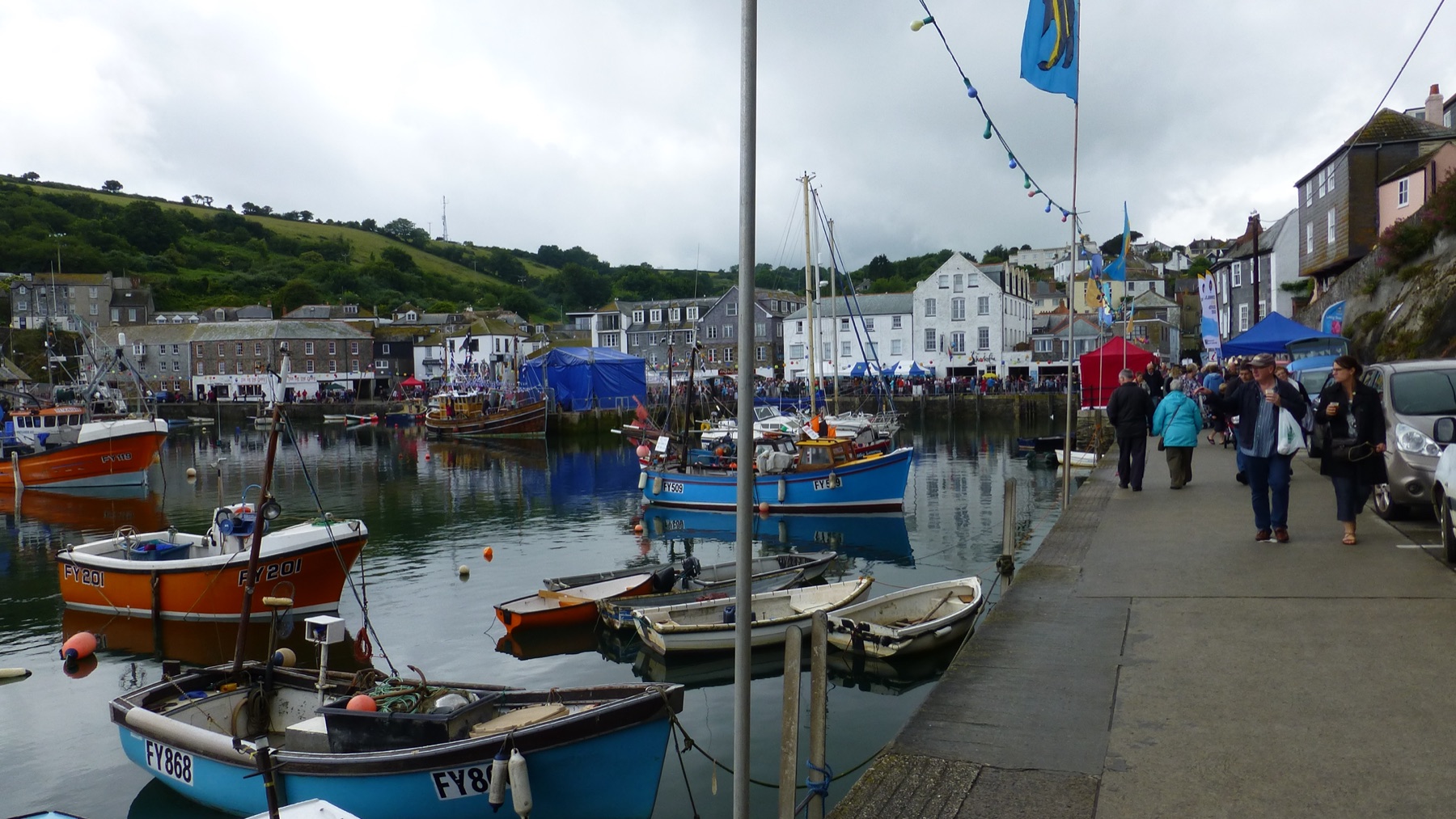
The village
Mevagissey sits in a fold of the cliffs a few miles south of St Austell, on the stretch of coast that looks out over St Austell Bay. The village takes its name from two Celtic saints, St Meva and St Issey — Meva hag Ysi in Cornish — and it has been catching fish for a very long time indeed.
It is not a village that was designed so much as one that grew: cottages stacked up the hillsides, lanes barely wide enough for a car, and steps and passageways cutting between them. Most visitors leave the car in the park above the village and walk down, which is by far the best way to arrive.
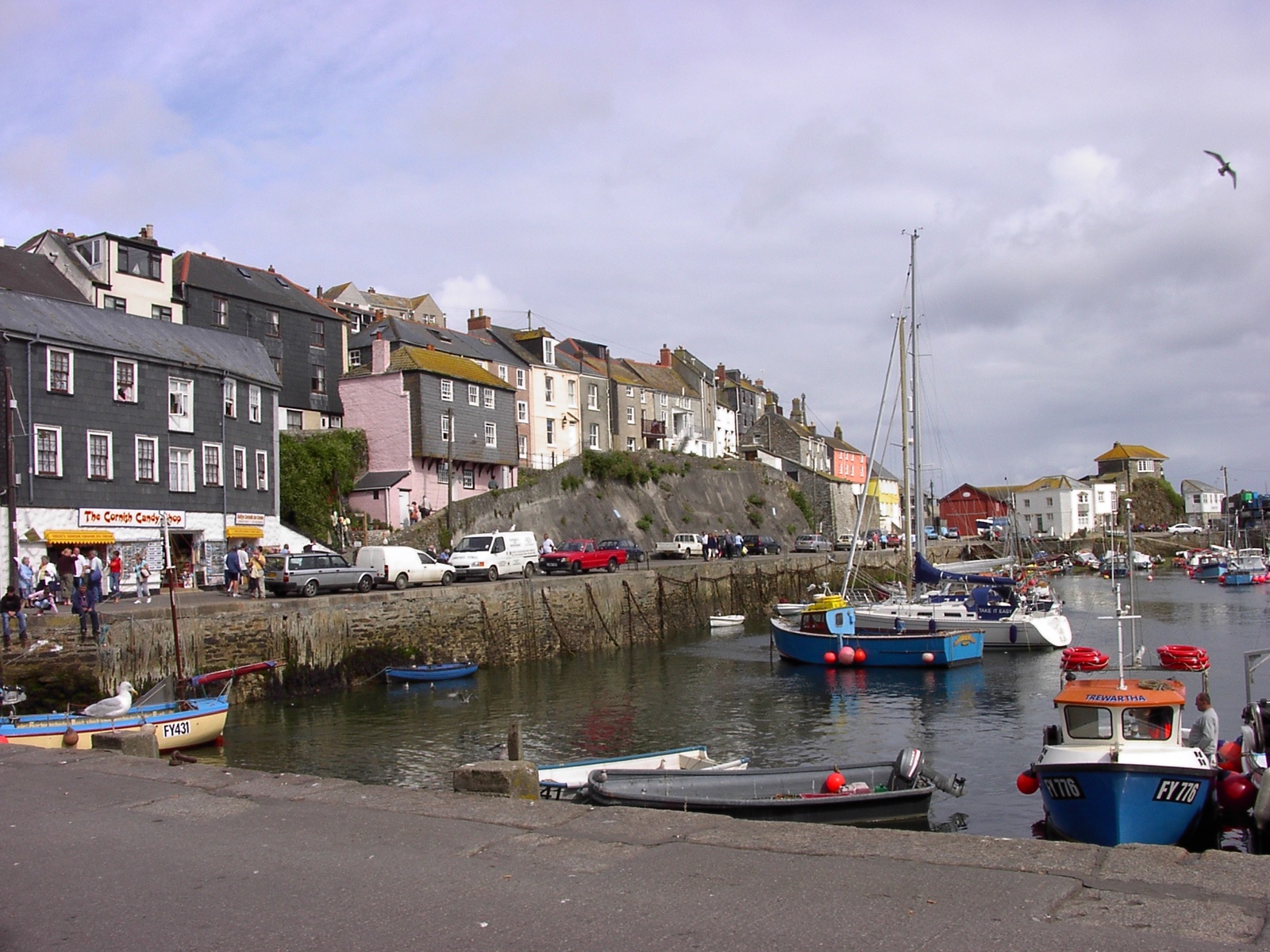
Two harbours
The heart of the place is the harbour — or rather the harbours, because there are two. The inner harbour is the older, and dries out at low water so that the boats settle onto the mud. The outer harbour, with its long arms of stone and the little lighthouse at the end of the pier, dates from the 1770s and has been rebuilt more than once after the sea took a dislike to it.
It is still a working harbour. There is a fishing fleet here, ice and fish going one way and crab pots the other, and boats taking visitors out for mackerel on a summer afternoon. In season a small ferry runs across the bay to Fowey, which is a fine way to spend a day.
A little history
For a couple of centuries the village lived on pilchards. They were caught in vast numbers, then salted and pressed in cellars along the harbour — the so-called pilchard palaces — and shipped out to Italy and Spain. The oil pressed out of them was worth having too, and very little went to waste.
Mevagissey is also rather proud of having had electric light unusually early for a Cornish village, generated locally in connection with the fish trade. The museum on the quay, in an old boatbuilder's premises, tells the story far better than we can, and is well worth half an hour.
If you have an afternoon
- Walk the outer harbour wall to the lighthouse and look back at the village stacked up behind you.
- The museum on the East Quay — small, free to enter, and full of the village's own history.
- Fish and chips eaten on the harbour, with a firm eye on the gulls. They are not shy.
- The coast path in either direction, north towards Pentewan or south over the cliffs to Portmellon.
The Eden Project
Of everything within reach of the village, the Eden Project is the one visitors ask about most — and it is barely twenty minutes up the road. The biomes sit in a worked-out china clay pit near St Austell, which is a large part of the appeal: an industrial hole in the ground turned into one of the best gardens in the country.
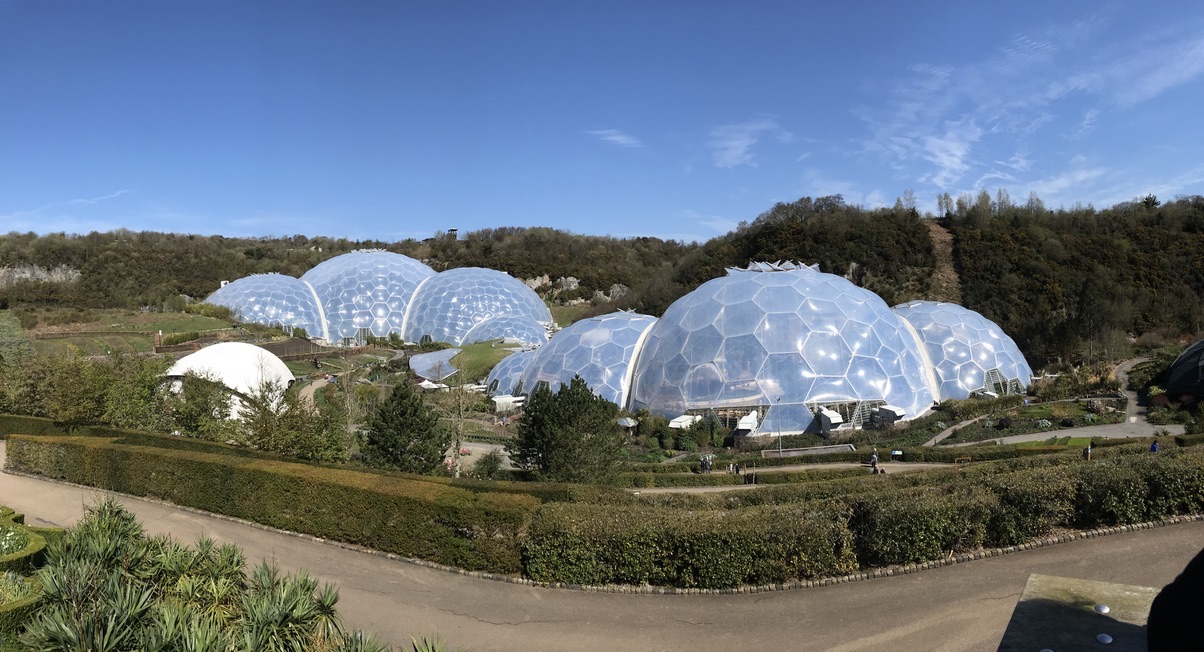
Under the domes are a rainforest and a Mediterranean garden, and outside them a great deal more planting than most people expect. It is worth a whole day rather than an afternoon, and it is at its quietest well outside the school holidays.
The Christmas lights
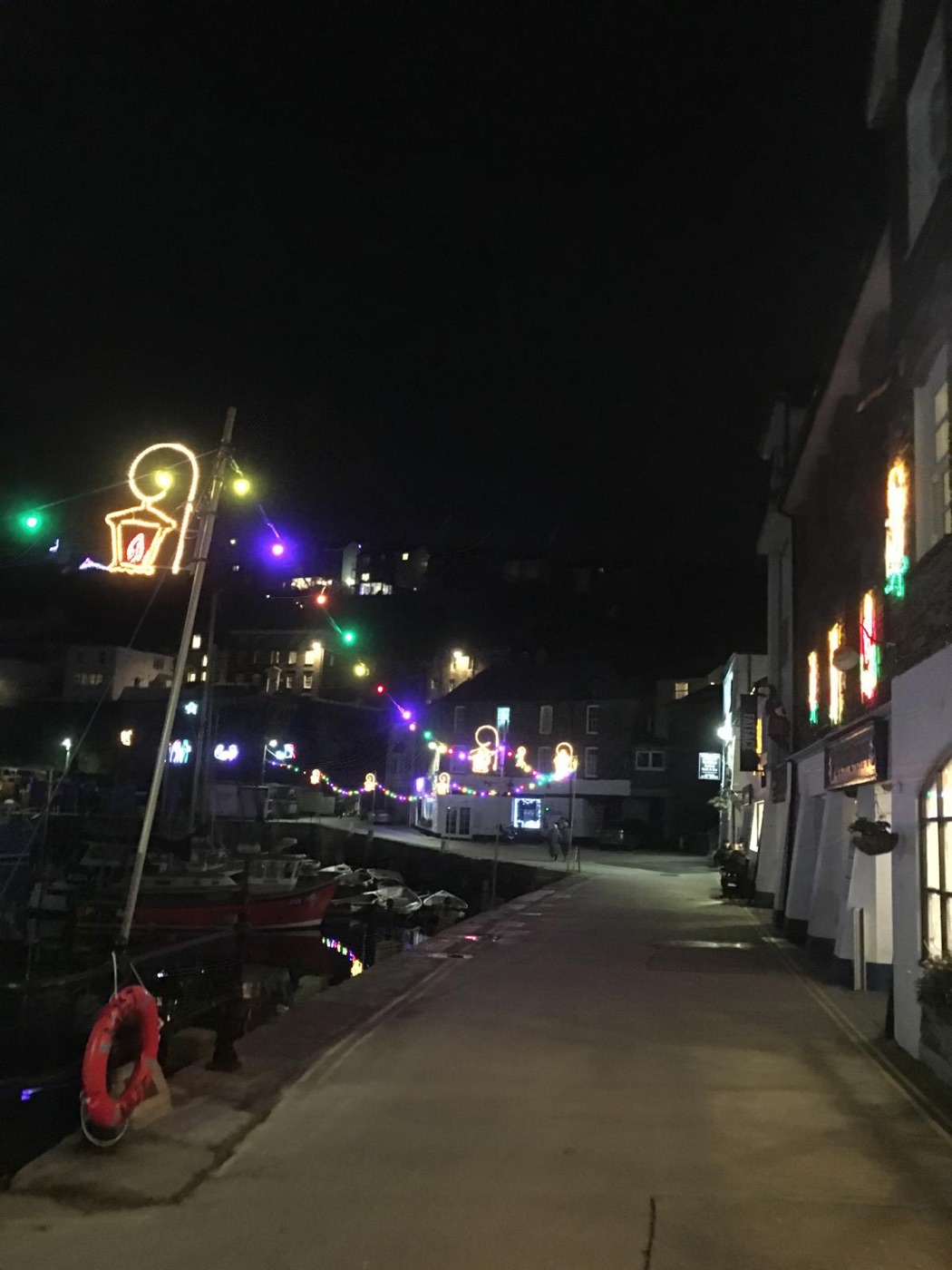
Come the winter, the village does something rather special. The Christmas lights go up all round the harbour and along the quaysides, strung between the buildings and running up the hill behind, and on a still night the whole lot is reflected in the water.
It is worth making the trip for. The village is quiet by then, the visitors have long gone, and you can walk round the harbour in the dark with the lights above you and the boats moving gently below. Photographs do not really do it justice, but this one gets close.
Round about
Almost everything worth seeing in this part of Cornwall is within a short drive of the village.
-
Heligan
The Lost Gardens of Heligan are a couple of miles inland — a Victorian estate garden rescued from a century of neglect, and the productive kitchen gardens alone are worth the trip.
-
Portmellon & Gorran
The next coves along the coast to the south. Portmellon is ten minutes' walk over the hill; Gorran Haven a proper little beach beyond it.
-
Caerhays
Caerhays Castle and the beach at Porthluney, famous for magnolias and camellias in the early spring.
-
Charlestown
A preserved Georgian port up the bay, where the tall ships are moored and half the costume dramas on television seem to be filmed.
-
Pentewan
A wide sandy beach a short way north, with a flat valley trail running inland — good for bicycles and gentle legs alike.
The village year
Summer brings the visitors, and the village is busy and cheerful with it. Feast Week in June is the high point — a week of events around the harbour, ending with fireworks over the water.
Out of season it belongs to the village again. Winter gales come in from the south-east and put on a considerable show at the harbour mouth, and there is a lot to be said for watching them from somewhere warm.
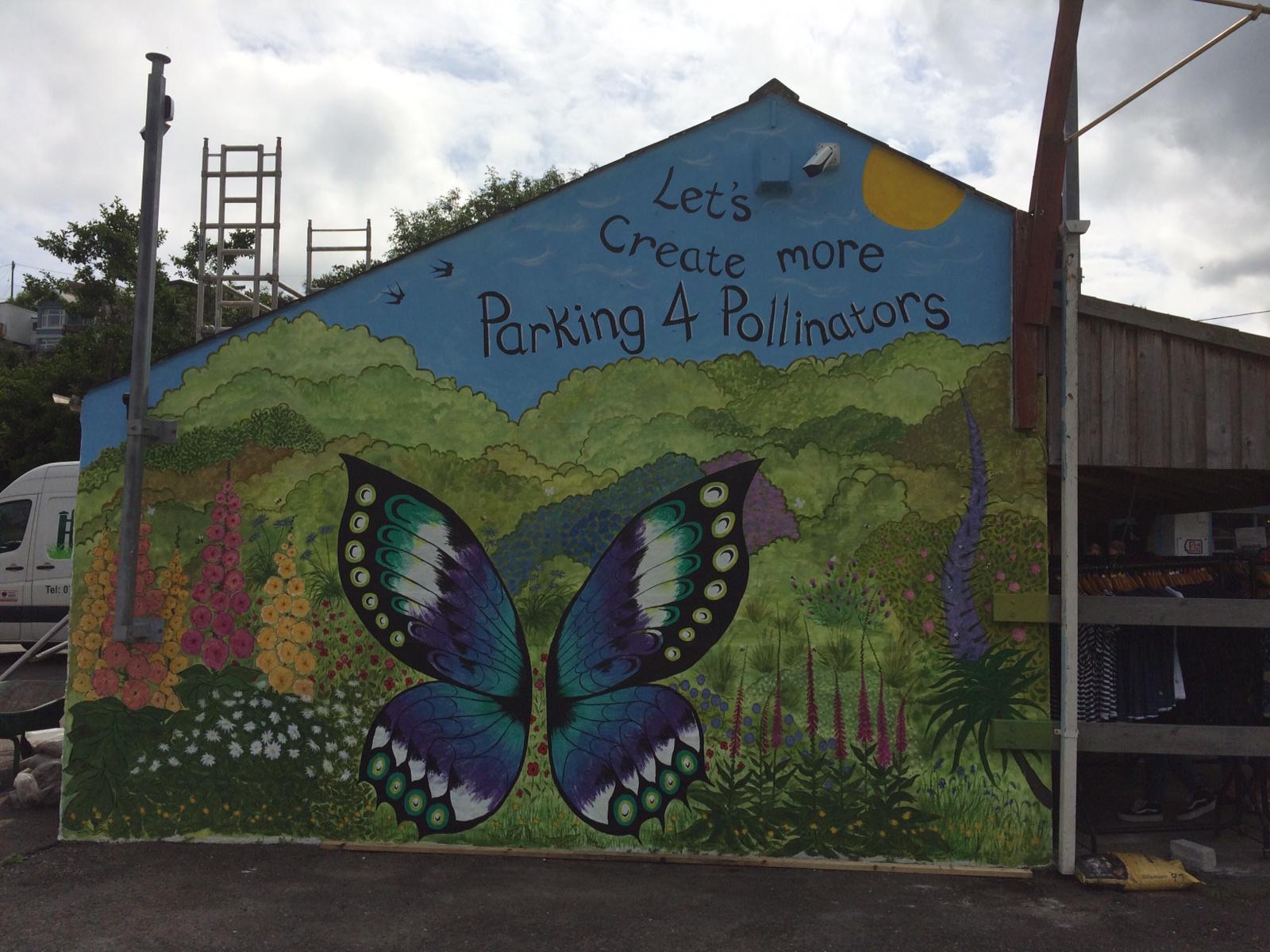
And things get done here. This mural went up on a gable end in the village — “let's create more parking 4 pollinators” — and it is a fair summary of the place: a good cause, a decent joke, and somebody prepared to get the paint out.